The students are not the problem

The student group Uni Melb for Palestine are currently occupying Arts West – a prominent building on campus.

When I left campus this evening they’d been there for around 28hours. Here are some quick thoughts.

If anyone is observing the sit-in from afar, it is important to note that university leaders and administration will do their best to position the sit-in as disruptive. They will point to cancelled classes as evidence of this. This is a tactic of power.

And when they do this, we should all know that the university chose to cancel classes in Arts West yesterday afternoon. The university sent an email this morning telling us that Arts West would be closed all of today and to ‘avoid the area’, without giving any information as to why. Honestly, they’d tell us more if there was a power outage.

Their threats to call the police on their own students will become calls to the police, and they will say they were “forced”, when the students have a clear list of demands regarding divestment from weapons manufacturing which the University is not willing to discuss. And so rather than address the ethical problems of being financially and intellectually invested in violence, they will frame the students as violent in order to justify police presence. As Sara Ahmed has told us time and again, ‘If you expose a problem, you pose a problem; if you pose a problem you become the problem’.

I walked into Arts West at lunch time today with no problem. I chatted with the students inside and then I sat in the sun outside to mark assignments. TV crew were hanging around. It was calm and quiet all day.

Students in my afternoon classes (not in Arts West) told me their tutors had simply moved classes into courtyards and carried on with very minimal disruption.

Students complained to me about the way news presenters from commercial TV studios were framing questions to people passing by the building.

Students asked permission to leave class early to attend a snap rally.
The students are not the problem.

The students are exposing a problem.

Finding and Making Feminist Time: A Messy Reflection on Method

Time

Hamilton1, that very popular but not very feminist musical, gives its last moments to a woman who wonders what to do with the gift of time. Addressing her dead husband she says, ‘I stop wasting time on tears, I live another fifty years, it’s not enough. … I ask myself what would you do if you had more time?’ (Miranda 2015a, ‘Who Lives, Who Dies’). I start here, not because I’m intending to write about Hamilton, although I could, but because I want to think about time. About the possibility of finding and making feminist time.

Finding Time Out, 30th July, 2022

I’m at a quiet café in St Kilda. Sunlight is coming through the window behind me. I’ve just bought a copy of All about Love by bell hooks. I read the preface. I feel refreshed. I note in the margins that I am struck by how I have forgotten to take time to do what I love. I have forgotten what I love. I remember how I once said I ate feminist theory for breakfast. I need to get back to that diet.  I need to make time for that.

Time is a resource that feminists need to do what we do. Sara Ahmed (2017, p. 242) contends that ‘Time out might be required for time in.’ Doing feminist research requires time. Time for reading, writing, doing. Equally, it requires time for reflecting, for thinking, for sustenance, for inspiration.  Time simply for being. Time for loving ourselves, our work, and each other.

hooks (2001 p. 6) teaches us that to love is to ‘nurture our own and another’s spiritual growth.’ I try to make a feminist, spiritual practice of reading a chapter of hooks in that precious, mythic thing we call ‘spare time’. I want to read for sustenance and inspiration, and also joy. I want to read as an intentional feminist spiritual practice.

By the end of the year, I’ve read six chapters. There are only thirteen. Is one hour a month all I can cram, in between tutoring, marking, more marking, a non-academic job in theatre, finally finishing those few PhD revisions, making dinner, washing my clothes, washing the towels. My feminist growth is slow, but maybe slow growth is my feminist method.

Finding Time, Filling Time, 17th November, 2022  
I wrote the first draft of this paper at midnight, because I found I had time.

I wrote my PhD during lockdowns put in place to limit the spread of Covid-19. Time was perhaps one of the few things I had in abundance. I rarely wrote at midnight, although I did often write late at night, because I had nowhere else to be. Time ‘off’, but being home, was not time out.

Writing on the possibilities of thinking about Covid-19 sociologically, Raewyn Connell (2020) suggested that now was the time to let go of old methods of doing sociology. Now was the time for sociology to be creative, innovative, imaginative. Connell (2020, p. 750) contends that:

For those working within the managerial university, perhaps it will be important to publish less and so free up more time for sustained thought. Heaven knows that was scarce before everything went online and seems to be scarcer since. This will need collective action.

In a similar manner, Debra Cohan (2021) suggests that the opportunity (and challenge) presented to academics by the pandemic is to take time to pause and reflect on purpose and priorities, refusing to fill up every moment of time. As I redrafted this, in early 2023, I wondered what might this meant for me, an in-process feminist researcher, sessional teaching assistant/lecturer/research assistant/tutor, thesis done but not yet graduated, articles under review but not yet published, and still riding with academic training wheels on, and grasping at every opportunity

An Introduction (or, some context)

My PhD explores the conceptual slide between ‘right’ belief and ‘right’ gendered and sexual behaviour within the Sydney Anglican Diocese. Sydney Diocese is, predominantly, a theologically and socially conservative diocese, holding to a doctrine known as ‘complementarianism’. Put simply, complementarianism tells a story about how men and women – and it only considers men and women – should live and do Christian ministry. The complementarian story says that men, specifically husbands, are to lead and teach, while women, specifically wives, are to submit. This story is informed by readings of the Bible and usually thought of as theology. However, I think of it as a discourse – a shared cultural story which uses gender to construct and regulate the boundaries of orthodoxy and orthopraxy (Shorter 2021). 

In my thesis I raised two central questions: What are the social consequences of complementarianism and how do the experiences of Christians, particularly of women and queer Christians, challenge or destabilise the complementarian story? To answer these, I interviewed parishioners and ministry staff, becoming what Sara Ahmed (2017, 2021) would term a ‘feminist ear.’ From July 2019 to November 2020, I heard people’s stories of life in the Diocese. I attuned my ear to the experiences of women and, where possible, gender diverse people. I attuned my ear to those who typically are not heard in Sydney churches. I have been attuned to their stories, so that in them, I might hear answers to my own research questions.

Developing feminist ears shaped the stories I heard, how I heard them, and how I wrote about them. While people told positive accounts of church life, they also spoke exclusion, gendered violence and religious trauma. These stories can be hard to hear. My thesis might be ‘done,’ but my work of hearing hard stories as I do feminist and trauma informed sociology of religion, particularly Christianity, is only just getting started.

The question propelling this essay 2is, how do I (we) find the energy and time to support feminist ears to keep hearing what is hard to hear?  This paper is a messy reflection on method, on writing and on time. I don’t have the clear outline of key points that would normally appear now, I’m still figuring them out.

In the following vignettes, I retune (and return) my ears to some of the stories I picked up during field work which I have not yet put down. I think about how I heard them, how I held them, how I wrote them.

December 2019

As I read Belle’s completed survey detailing her experiences as a leader in the church, I’m struck by how often she writes of feeling like a trespasser. When I interview her I’m struck by how often she cries. She describes herself as ‘not fully formed’ and repeatedly says she is worried about failing in her church work, failing God.

‘What do I want for [my daughter]’ Belle wonders, ‘I guess … to know that God … wants her to flourish, and be her full self … To be who he made her to be.’

I interject – ‘and not feel like a trespasser?’

Belle responds, ‘exactly. That’s right. Like the woman at [a church outside of Sydney] – where I felt like she was just so light in being herself, and using her gifts … but I’m still asking those questions of [ I note as I transcribe that Belle starts to cry] ‘is this ok?’ and ‘is this enough?’ and, does it match what I think God is doing in the world, you know?’

During the interview, I move to sit next to Belle. I hug her. I’m trying not to cry with her. Am I allowed to hug her? Am I allowed to cry? To shift tension, I tell her about my experiences at a church in London. I recognise my story in her story. As I speak, I am concerned there will be too much me on the transcript.

I’d like to come back to Belle in a year. To see if she feels more ‘enough’, more ‘formed’. I don’t do this. Am I enough as a feminist researcher? Why was this interview so hard to hear. Are my tears wasted time or are they my method? Is there a story contained in those tears, if I choose to listen? And if I listen to that story, what do I do with it? Who needs to hear it?

I know I’m not fully formed.

November 2019

Alice and I are at a café. She’d sent an email offering to be interviewed and explaining she’d been to theological college. This had been an experience of both grief and joy. I begin the interview by referring to this.

I intended to ask, ‘was grief and joy about college, or faith in general?’ I didn’t get that far. She jumped in, explaining her pathway to studying at a conservative Anglican college. At 3 minutes and 21 seconds, she casually, and almost cheerfully, discloses that she started dating another student who was ‘super abusive, super awful.’ Her church responded by standing her down from ministry. After a while, she says, ‘feelings check, by the way, are you ok?’

‘I’m ok, are you?’

‘yeah, I’m fine,’ she says, ‘I’ve told this story lots.’

Alice has told the story lots. In Complaint! Ahmed (2021, p. 36) writes that:

The person who makes the complaint – who is often already experiencing the trauma or stress of the situation they are complaining about – ends up having to direct an unwieldy process. The person who puts the complaint forward ends up being the conduit; they have to hold all the information in order that it can be circulated; they have to keep things moving.

Ahmed goes on to (2021 p. 50) describes a path from being the person who makes a complaint to being the person who actively works to make change. Alice stayed at that church for some time and advocated for a domestic violence policy. She said “I made a stance that I wouldn’t leave until that happened. … I feel like I have the capacity and the experience and a voice …  I see how God has helped me to be an agent of change’

Alice’s story is not an isolated story. The National Anglican Family Violence Research Report (Powell & Pepper 2021) shows that Anglicans experience instances of domestic violence at the same rate, or higher, than the general public. Misuse of Scripture is often part of that abuse. That report was hard to read. Sometimes the data is hard to read. Sometimes it arrives, unlooked for.       

Cassandra is in her seventies and has been at her current church for over thirty years. I ask her unplanned question – does she thinks the church culture in Sydney has remained constant or shifted?  Gendered violence is embedded in her reply, a sort of by-the-by this happened, and anyway on with politics:

Its shifted to be much more hard-line. I thought it was bad enough in the 60s and 70s. Now, I’ll have to give you a bit of information, that you won’t have a question for, which is that my now ex-husband was a very big deal in [Anglican governance], and he believed thoroughly in wives doing what their husbands said etc, and I went along with it, that’s what the bible said, that’s how it was. It did end up in, not domestic violence, but certainly domestic abuse. And because of that, he used to host the committee meetings at our house. …

In speaking about their religious lives, women I spoke to, alluded to the ways they had been limited, to the harms done to their faith, their minds and – in some cases – their bodies. Sociologist of religion, Meredith McGuire, teaches us that religiosity and spirituality is embodied. McGuire (2008, p. 97) writes, ‘spirituality fully involves people’s material bodies, not just their minds or spirits’. I did not intend to become someone who reads and writes about the violence done to peoples’ minds, spirits and bodies in Christian spaces. But that is the data that arrived.

May 2020

I interview Alice again, by Zoom. At the end of the interview, she asks how my research is progressing. I tell her:

I have a lot of interviews done. I’m starting to see the shape of some things. I think one of the hardest things for me, and I spoke with you about this back in November, that sense of, you know, I don’t want to write something that’s critical just for the sake of being critical, I have no interest being like ‘oh, church is a horrible place’, but … often the stories people tell you are stories of when they were hurt, so you can get stuck in a space of that, but part of the point of this is that there is so much nuance, and people who are thoughtful, and people who are working really hard to see other people flourish, and making sure to balance those things, well, as you say, can be complex.

She replies, ‘yeah, but you can only tell the truth you know.’

Confession/Conclusion

Writing about methods terrifies me.

As I pulled my thesis together into a first full final draft, and started to flesh out my notes on method and positionality, I realised how much developing a feminist ear was my approach, as well as a possibility and a limitation. I heard certain stories, from certain people, because I was a feminist researcher and also an Anglican woman, researching in a conservative Christian space.

 Of the 28 people I interviewed, there were eighteen women, one non-binary person and nine men. As an unmarried woman, I am not socially expected to speak about gender and sexuality with unmarried Christian men.  As researchers, ‘our very bodies and positionality in social life will impact on who we are able to talk to’ (Page and Shipley 2020, p. 11). Of the nine men I interviewed, eight were married. The one unmarried man was highly conscious of the impact of his own sexuality and unmarried status on his interactions with women at church (and perhaps also his interviewer?).

 I cannot be certain, but the willingness of women to be interviewed may indicate that, compared to men, women are more conscious of the limitations and harms of complementarianism. Or, perhaps in communities that privilege the voices of men, women and gender diverse people are more appreciative of the chance to have their Christian story heard.

Feminist hearing became my method for hearing those who are not heard. Doing the work to hear stories of inequalities and violence, and of resistance and remaking, takes time and energy, and I’ve run out of time to think more about time.

I don’t know how to draw this together. This paper is messy. I’m messy. I’m tired. I’ve read and re-read Ahmed’s Living a Feminist Life so I know that feminists need other feminists to do the work we do. That’s why in my ‘spare time’ I’m setting up a support network for people doing feminist church work and research. That project gathers dust while I mark essays. I know that researchers need time to write, but to badly borrow from Virginia Woolf, writers also need money and a room of their own, and yet, I can’t buy time.

In 2022 I did not keep up my diet of feminist theory, or achieve my writing goals. Instead, I signed up to multiple casual teaching jobs. I also went back to my non-academic job because for three years people told me there was no work in academia. Research (and that thing we must do so that we do not ‘perish’) takes time, yet it is ‘the most easily deferred task as academics manage competing demands. … the “urgent” can crowd out the “important”’ (Peetz, Baird et al 2022, p. 74). Instead of finding ‘spare time’ for writing, I worked backstage on Hamilton, that popular but not very feminist musical.

At the end of act one, as the ensemble crowd around Hamilton asking, ‘why do you write like you’re running out of time?’ (Miranda 2015b, ‘Non-Stop’), I tell myself to make time for feminist research, reading and writing. For feminist listening.  Make time to nourish your feminist ears, mind, spirit and body. Kristin Aune (2015) – yes, new information in the last lines – contends that feminist spirituality is simultaneously social and individual, it is practiced, it is lived.  I want to make time for my own feminist spiritual practices, for being in the company of feminists whether that’s my peers or my books. I already know that’s what I need to do to support myself and to support others, as we hear stories that are hard to hear. I don’t want to hold these stories on my own. I want to make feminist time and I want to make time for feminists.

References

Ahmed, S., 2021. Complaint! Durham and London: Duke University Press.

Ahmed, S., 2017. Living a Feminist Life, Durham and London: Duke University Press.

Aune, K., 2015. Feminist Spiritualty as Lived Religion: How UK feminists forge religio-spiritual lives. Gender and Society 29(1), pp. 122–145. doi: 10.1177/0891243214545681[last accessed 19 November 2022].

Cohan, D.J.,2021. ‘Rethinking What We Value: Pandemic teaching and the art of letting go’ in J.M. Ryan,  ed., 2021. COVID-19: Two Volume Set (1st ed.). Routledge. https://doi-org.ezproxy.uws.edu.au/10.4324/9781003155911 [Last accessed 15 December 2022].

Connell, R., 2020. ‘Covid-19/Sociology’, Journal of Sociology, 56(4), pp. 745751, doi: https://doi.org/10.1177/1440783320943262 [Last accessed 15 December 2022].

hooks, b., 2001. All About Love, New York: William Morrow.

McGuire, MB., 2008. Lived Religion: Faith and practice in everyday life, Oxford: Oxford University Press.

Miranda, L., 2015a. ‘Who Lives, Who Dies, Who Tells Your Story?’, Hamilton: An American Musical

Miranda, L,. 2015b. ‘Non-Stop’, Hamilton: An American Musical

Page, S.J., & Shipley, H., 2020. Religion and Sexualities: Theories, themes and methodologies, London and New York: Routledge.

Peetz, D, M. Baird, R. Banerjee, T. Bartkiw, S. Campbell, S. Charlesworth, A. Coles, R. Cooper, J. Foster, N. Galea, B. de la Harpe, C. Leighton, B. Lynch, K. Pike, A. Pyman, I. Ramia, S. Ressia, M.N. Samani, K. Southey, G. Strachan, M. To, C. Troup, S. Walsworth, S. Werth & J. Weststar 2022. ‘Sustained knowledge work and thinking time amongst academics: gender and working from home during the COVID-19 pandemic’, Labour and Industry, 32(1), 72-92, doi: 10.1080/10301763.2022.2034092, [Last accessed 15 December 2022].

Powell, R., & Pepper, M., 2021. National Anglican Family Violence Research Report: Top Line Result, NCLS Research Report. NCLS Research

Shorter, R 2021, ‘Rethinking Complementarianism: Sydney Anglicans, orthodoxy and gendered inequality’ Religion and Gender, 11:2, doi: 10.1163/18785417-bja10005


  1. As a member of crew on the Australian production of Hamilton, I have heard the lyrics cited in this essay multiple times throughout 2022, performed by the Australian company at Her Majesty’s Theatre, Melbourne, located on Wurundjeri Country. ↩︎
  2. This essay began life as a conference paper, presented at The Australian Women and Gender Studies Association conference on Activist Energies in November 2022. ↩︎

On feminist survival kits

Since writing the final chapter of my thesis (also, hello, its been a while but I was writing a thesis) I’ve been thinking a lot about feminist survival kits (Ahmed 2017). Both about the importance of having a feminist survival kit, and about being a feminist survival kit.

Sara Ahmed (2017 p.236) teaches us that ‘Feminism needs feminists to survive,’ and that ‘feminists need feminism to survive’. In my final thesis chapter, I adopted this to say that Christian women need (other) Christian women to survive in the church. But more than this, if the church is to survive in the future, it needs women preachers, as well as gender-diverse preachers to survive. And I mean that in both the ways it can be read. The church needs women and gender-diverse preachers in order for the church to survive, and also it needs to stop harming women and gender-diverse preachers (and parishioners); they need to survive.

Wait – what is this about surviving?

Where churches do not work to hear women and gender-diverse people, either in the pulpit or in meetings, then women and gender diverse people are undervalued, and often excluded, their experiences and knowledge is undermined, and they do not have the same opportunities to further develop their teaching skills or seek employment as their male counterparts (Lauve-Moon 2021; Maddox-Pidgeon 2021). This can seriously hurt and limit women and gender-diverse Christians. Emma, an Anglican woman in her twenties spoke to me about the lack of women preaching as a ‘harm.’ Before coming to her current church, she ‘didn’t hear the Bible … from a woman’s perspective’ and sometimes felt that unsupported and limited by the church and by Christianity. She recalls that as teenager:

The harm that I felt then, is that, I just felt like my whole role and place in the world was really small. I didn’t feel like I could be capable of doing anything… this is my little life, and I’m dependent on the goodwill of others to either marry me or have like a little job and little children and I cook and clean for them until I die, and then, that’s the end… I didn’t feel …that God would use me in a particularly significant way.

We also know, that teaching which focuses on strict gender roles (like mothering, cooking and cleaning as the only appropriate paths for women) can contribute to domestic violence (Truong et al 2020). Additionally, given that we know Christian women are more likely than Christian men to experience and report intimate partner violence (Aune and Barnes 2018; Powell and Pepper 2021),and that the nature of this experience may lead them to seek the support of a woman on staff, we can assume that women on church staff will do more trauma work than men on staff (this in turn is another thing that makes experience of church gendered and unequal). Sometimes we really do have to do work to make our communities places of survival.

For Emma, hearing women preach was one factor which renewed her experience of church. It provided a sense of belonging and safety; she says women preaching showed her ‘that this truth is for me as well.’  Christian women preachers, leaders and mentors, who preach in a way which is critically informed by experience (you’ll just have to take me word on this for now and wait for thesis/thesis related publications) are a survival kit both for other women and for the church. 

A survival kit can include many things. Sara Ahmed lists 10 items to include in a feminist survival kit and among my favourites are books (item 1) and other killjoys (item 7). This one probably sounds strange if you aren’t a nerdy Ahmed fangirl (i mean, very serious reader of Ahmed), but my paraphrase is, you need people who will stand with you and alongside you when you call out the exclusion and harm that springs from heterosexism and racism. You need to surround yourself with people (and books) that show you it is possible to think, act, be and live in multiple ways, because its lonely to do it by yourself.

So, post-phd (ok, post thesis submission – I know it will come back) i’ve been having chats with some of the people who made up my own survival kit while I was studying about creating a bit of a network to act as survival kit for people doing feminist, queer, trauma-informed and decolonial church work and research. And we’re going to do it. We’re going to set up a Survival Collective (and my thanks to Sara Ahmed for giving a thumbs up to this project – please imagine me dancing excitedly in my living room when I read that message).

I’m not 100% sure how it will work, or what the full scope will be, but at the very least there will be a website which can act as a place to find resources to put in your own survival kit (along the lines of Ahmed’s 10 items), a place to publish short essays, and hopefully, in time, opportunities to connect, chat and support other people who are doing this sort of work, whether as a social researcher, theologian or pastor.

This network, is very in-process, because as it happens, I’m research-tired & I need to spend some time with one of the key aspects of a survival kit – the texts i’ve read again & again which always bring me life (time, by the way, is item number 4).

Please watch this space, and feel free to check in and say, ‘hey Rosie Clare, what happened to that thing you were working on?’

Loss is a strange feeling

Loss is a strange feeling. I don’t know what to do with it.

So I’ll tell you a story.


A Conference

In that other 2020 that didn’t happen, I’m in New Zealand, at the start of a conference. I’m with three fantastic women who are going to speak on a panel with me. We worked hard in January to get our panel abstract in on time. We put in time. We worked together. I started looking up accommodation. It took effort. And then all of a sudden none of that meant anything anymore.

In April, I found that I was in the absurd position of grieving a conference.

I want there to be space on my academic CV to say, hey, in the second year of my PhD I organised a conference panel, and wrote a panel abstract, and we all got accepted to speak at an international conference. Please honour what I would have done. I try not to centre my life around an idea that hard work always leads to reward. But those hours don’t come back, and I feel like I have nothing to show for it.


Arts

I realise that I feel this way about the arts industry. I might be a PhD candidate, but the arts is my homeland. And I realise I am in the absurd position of grieving an industry. I want to believe that 2021 will be a better year, but I can’t see that year at the moment. I want there to be a space for us to honour the people we are, the things we were going to do, the goals we were going to achieve.

Of course, sometimes I’m sad about relatively silly things. I’m sad that Brenton and I didn’t get to take our mothers to see Harry Potter and the Cursed Child, and that our tickets are just hovering somewhere in theatre limbo.

20200225_114111And I’m sad for my own small pursuits, outside of the work I actually get paid to do. I’d planned to model at Dr Sketchy’s with my theatre husband, Rhys. Miles and I were finally going to a gig together after three or four years of dreams and talk. I was going to sing againwith Mouna and Simon, and irreverently dedicate Cole Porter’s song ‘Every time we say Goodbye’ to biodiversity. I was hoping to MC for the first time at Red Light Confidential.
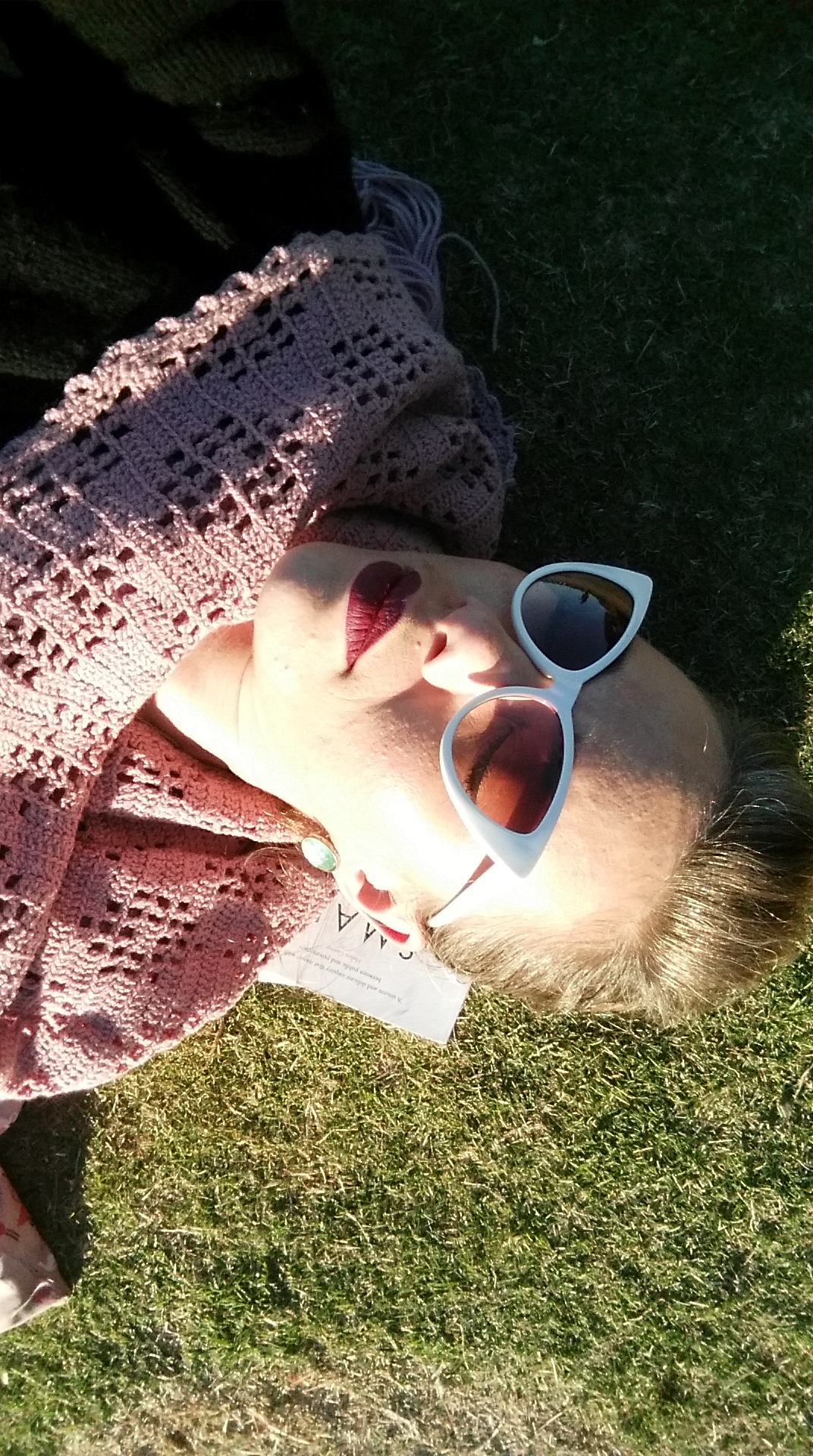
But honestly, all these things, these plans, amount to nothing when I think about the monumental losses I see all around me when I think about my theatre people.

I think about the lost income. The lost opportunities. The tours that were cut short (Bran Nue Dae was great, Hamish, Tristan, you guys should have had a much longer run). The tours that didn’t happen (Brenton, you would have managed that tour schedule even if it was tough. Danita, I was excited to hear you sing). I think about the loss of communities. The loss of lives.


Loss

This morning I sat reading Rebecca Huntley’s How to Talk About Climate Change.I just finished chapter 10 ‘Loss, or bury me in a carbon sink.’ She writes about how loss (and other emotions) can both motivate and hinder action on climate change. In writing about loss Huntley says:

In terms of emotion, loss is a step beyond sadness towards grief, anguish and pain caused by losing someone or something of high value. But at a more basic level, loss can refer to having to (or being forced to) give something up… (p. 197).

I cried as I read this. Yes, I cried for the world. I cried for the biodiversity that I was going to sing to at my show that I never got to do. But I also cried for the Arts. I cried for my friends, who are also my family.

One month ago, I found out a friend had died. Last week I found out a venue I had the joy of producing shows in was closing. Last night I found out a colleague had died. Loss is a strange feeling. I’m not sure what to do with it.

“Every religion,” writes Huntley, “has its own highly developed rituals to deal with grief and loss.” She continues:

In countries like my own, with a growing number of people who describe themselves as having no religion, we’re more likely to go to a therapist than a church when we find ourselves trying to cope with these emotions. Sometimes that works, sometimes it doesn’t. …. the collective nature of grief in religious communities can sometimes offer the kind of comfort therapy can’t”. (p. 205)

I want us, in the arts, to sit together and honour who we are, and what we were going to do, and what we have lost, and what we hope to do in the future. In the coming weeks and the coming years. This is probably an on-going project. But I’d also like to host an online space where this can happen. Where we can talk about lost work, opportunities, community and – tragically – lost lives. If this would be helpful to you, please be in touch.


Go well friends.


Why my last name is not Schrötter: some in-process thoughts on family, identity, refugee week and reconcilliation week.

This is an open story, it is in process. The process is a bit like path, and I’m not entirely sure where it’s leading. Along this path I think about family, identity, refugee week and reconcilliation week. These things converged. They got tangled. They probably could do with  an extra tidy up, but here we are. Let’s walk down the path.

2nd July

I’ve been sitting with some thoughts. Walking with them. I don’t know what to do with the thoughts. I write them. I worry about them. If I share them, am I clouding space that should be free for other voices.


“I have come to believe over and over again that what is most important to me must be spoken, made verbal and shared, even at risk of having it bruised or misunderstood” [i]


A little while ago I finally got my hands and eyes on a collection of words by Audre Lorde. And now I’m thinking about words and silence. I come to Lorde late. I come to her via Sara Ahmed. So, I thank Sara for her commitment to wilfully reference women.

“I was going to die, if not sooner then later, whether or not I had ever spoken myself. My silences had not protected me. Your silence will not protect you” [ii]

I attended an online rally tonight, hosted by the Asylum Seeker Resource Centre. The words of a  man in detention in Brisbane came directly to me, as I sat safely at my desk. 7 years ago, I knocked at your door. I feel so broken because I don’t have the authority to open the door. I can write. I can petition, pester, pray, post on Facebook. I wish I could open the door.


18th June

It is currently refugee week. Before that it was reconciliation week. I sit in my room and  stretch my mind back to the 21st of January 2020. I’m attending a session at theAnglican Deaconess Ministries summer school called ‘How to take the Aboriginal Hand of Friendship.’ It’s led by Brooke Prentis, Waka Waka woman. Now the CEO of Common Grace. On the floor behind me is an AIATSIS map of this place now called Australia. I realise I’ve never really looked at it. Absorbed it. Thought about what this map might teach me. I’ve come to this late. In the middle of this session she asked us to group together and ask each other to tell our stories, but not in terms of our jobs or where we study, but in terms of people. Who are your people? Where are they from? Not as accusation, but an invitation to know someone. Brooke suggests that we see reconciliation as friendship.


I’ve spent some time trying to re-inhabit a family story. Three of my grandparents were born in Eastern Europe and migrated here, to – as Brooke says – these lands now called Australia.  I have become comfortable now, claiming my three migrant grandparents. A Polish man. Two German-speaking Jews. Once they were in Sydney, one of them, Edith, but we didn’t call her that, named her sons – my father and his brother – after local Christian churches. Their birth certificates state their religion. Jewish. But Edith has crossed it out. She’s written the word ‘Christian’. My grandfather – her husband – changed his name. Got rid of the umlauts. And that is why my name is not Schrötter.


2000

I’m 17. I spend the year creating a giant artwork for my HSC that I eventually call ‘More than an XX’. It’s two large panels, each with a collage of family photos arranged into the shape of an X. I accompany this with two horizontal boards that contain pictures of me alongside clippings from magazines, photos of celebrities, covers of Baby Sitters Club books, my friends, my church youth group, an ad for subzero. I think that I’m trying to work out how to collage phenotype and environmental influences. I’m actually curating the performance of my identity.


2018

I throw out my HSC artworks. I’m 35.


2nd July 2020 ‘Alas for the times’…

In my bookshelf there is a book called I have not seen a Butterfly around here. It is a collection of poems and pictures by Jewish children in Terezín. I go and get in and flick through it for the first time in years. I wish I could remember clearly, that day, in Prague, 10 years ago when I bought it, when we found the names of Edith’s family on the wall of the Synagogue.

The Old House

The old house stands here forsaken,

In silence, in slumber.

How beautiful this house was once

How beautiful then, standing here.


It is forsaken,

mouldering in silence

Alas for the house!

Alas for the times.

Franta Bass. 4/9/1930 -28/10/1944[iii]


18th June 2020

I remember grumpy me, 10 years old, 12 years old, 15 years old. Not understanding multiculturalism. Not feeling like I had a culture. Feeling angry at something I couldn’t define. Feeling frustrated that I had no food to offer at those picnics they host in primary school, because culture and difference is reduced to food. Bite sized. Easy to swallow difference. Not having the words to say or to see that I had so easily and uncritically slid into the norm. That I was the norm.


I have become comfortable claiming three migrant grandparents. Sometimes, I want to make a big deal of them, pretend I’m somehow less White, because somewhere at some point there were two migrant Jews who came by boat. That somehow this might excuse me from Australia’s colonial past. Except that I just get to be ‘Australian.’ No hyphens. I’m never Czech-Australian or Austrian-Australian or Polish-Australian. I just get to be. I get to be and live this life, on this land, that was, and is somebody else’s land, because I benefit from being White.

And I go to church, so I would feel like an imposter if I said I was Jewish-Australian


And obviously I have four grandparents.


I have to own up to the fact that grandparent four is descended from British colonisers. How joyously little me used to declare the absence of convict ancestors, as though that meant something. As though it was an achievement to be related to the man who built the road over the Blue Mountains, except he didn’t build it, he didn’t do the work. But he did other work. How much I wish little me had understood more. Understood more sooner. I have come to this late. I’m sorry.

A cousin sends me a message on Facebook. I notice you’re raising good questions about Lachlan Macquarie, he says. We should also be looking into what our ancestor, Macquarie’s acquaintance did.


The thing is, when you do something very public, like, for instance ‘build’ the road over the Blue Mountains, you don’t get to disappear namelessly, do you William Cox. William Cox built a road.  He built a road through Dharug Country. He made it possible for British people to mercilessly tear through Dharug Country and then invade Wiradjuri country too. Possible. Easy. I have to accept that. I have to do something with that.


I also have to say, this is who my people are. All four of my grandparents are my people.


2nd July 2020

So many doors were opened to them and now to me. Some willingly, some reluctantly. (Of course, there are closed doors too, and they account for my being here as much as the open ones)

And Brooke has asked me, and so many others, to take the Aboriginal hand of Friendship.


 I don’t know where the path goes now…


[i] Lorde 2007 [1984], ‘Poetry is not a luxury’ in Sister Outsider, Penguin Classics, p.29

[ii] Lorde, A 2007 [1984], ‘Poetry is not a luxury’ in Sister Outsider, Penguin Classics, p. 30

[iii]  Volavková, H (Ed)  1993 [1959].  I have not seen a butterfly around here: Children’s drawing and poems from Terezín. The Jewish Museum, Prague.

Questions I don’t have answers for (yet): Are uni queer spaces safe for conservative queer people?

Here are some words I wrote over on Facebook. I’ve got questions, and no answers. Sorry.  But maybe you can help me think through this.

So, if you’re willing, come on a thought experiment with me…

Are university queer spaces safe for conservative queer people? (And if not, should they be? And would this create a risk for non-conservative people and how would you mitigate that?)

Are they too ‘left’?

I understand why they are overwhelmingly non-conservative spaces. I understand that they have been fought for, and are the result of activism and personal cost/risk and emotional labor and all of that.

I also know that queer theory has been quite critical of ‘homonormativity’… Im thinking of early 2000s Halberstam, José Esteban Muñoz etc

And there was good reason for that.

And I’m not saying the ‘left-ness’, the non-conforming needs to be pushed into a corner. That there needs to be some form of ‘acceptable gay’.

But, are ‘we’ (i dunno exactly who ‘we’ is here) not supporting conservative – religiously and/or politically – lgbtiq+ people to also feel at home in their bodies (and their communities).

I don’t have an answer.

I rewatched the movie Pride the other day (the story of London based lesbian and gay people raising funds for Welsh miners during the strikes while Thatcher was PM) .. and I love how this film/example encourages unlikely solidarities, support across geographic and cultural barriers, even for those you considered a political ‘enemy’, because maybe you’re both actually fighting for the same thing (but have been taught to fight each other).

Judith Butler has a piece called  – i think – Acting in Concert where she says even if cis women, trans women and intersex people want different things for our/their bodies we should be able to stand together based on the fact we want to be able to make decisions for our own bodies and not have them made for us/done to us.

I dunno. Thats all i have. No punchy conclusion. No references.

And i might be wrong here.

Thoughts?

From the Vault: At the Expense of Evangelism

I had a meeting with my PhD supervisor this morning.

One of the things we spoke about was that time a year ago when Sydney Diocese gave $1 million dollars to the Vote No campaign in the plebiscite on Same-Sex Marriage.  What a time. I wrote about that on my old blog last year, and I’ve decided to re-post it here.

why am i doing that? because now that I think about it, it is still that time; in the news this week we have a discussion around whether  religious schools should be able to expel a student or fire a teacher because they are gay .  It seems that all the things that shocked me last year are still relevant.

At the Expense of Evangelism: A response to the Archbishop’s defense of the Million Dollar Donation to the ‘vote no’ ad campaign.

27/10/2017

I recently spoke on a panel event advertised as ‘Evangelicals Supporting Marriage Equality’. In the weeks preceding the event, I had coffee with an Anglican minister to discuss my involvement as a panellist, the use of the word Evangelical, and whether I apply it to myself.


In this piece, I respond to the letter written by the Sydney Anglican Archbishop, in which he defends the million dollar donation made by the Sydney Anglican Diocese to the Coalition for Marriage, urging Australians to ‘vote no’ in the postal survey on same-sex marriage. But my response to that letter is connected to the fact that I do, in certain key ways consider myself an Evangelical, so I will begin with a consideration of that term. Then, in responding to the letter, I suggest that as Evangelical Christians, we should consider how the million-dollar donation, and the defense of this action by the Archbishop, may actively work to detract from the evangelistic work of sharing the gospel.


Labels and Tags: Evangelical


I’m not particularly fond of labels and tags, but, as someone who spends a lot of time in feminist and queer theory, I understand there is value in declaring one’s subject position. Let me do this without the standard tags: I’ve dated a couple of men and – to borrow from Katy Perry –  I’ve kissed a girl, and I liked it. I’m unmarried and childfree. I read feminist theory. I critique cultural marriage narratives. I’m for feminist, transformative politics and subversive story telling[i]. Two of my grandparents were German-speaking Jews who came to Australia by boat, but I’m an inner-city white girl who grew up in the Anglican church.


I will take the label ‘Evangelical’. I do so because as a Christian there are certain key beliefs and values I align with that fall under the ‘Evangelical’ tag. The great source of knowledge that is Wikipedia defines Protestant Evangelicalism as a Christian movement which:


maintains the belief that the essence of the gospel consists of the doctrine of salvation by grace through faith in Jesus Christ’s atonement. Evangelicals believe in the centrality of the conversion or the “born again” experience in receiving salvation, in the authority of the Bible as God’s revelation to humanity, and in spreading the Christian message.[ii]


Amy DeRogatis, writing in Church History, uses ‘Protestant Evangelical’ as an “umbrella term”, for Protestant Christians who “who affirm the necessity of a spiritual rebirth” and are “grouped together by their literal reading of the Bible, their emphasis on inerrancy, the imminent return of Christ, mission-mindedness, and in many cases—though certainly not all—their suspicion of “worldliness” and the perils of secular culture”[iii].  While I do not insist on reading the bible through a literal framework, I do believe in the authority of scripture (and I seek to do justice both to the text and to the lived experience of people around me. I figure this is my duty if I’m to adequately pastorally care for my friends and family). I believe in salvation by grace. I do believe the gospel is good news, and I think most people I know would know that I’m always ready and willing to talk of my own faith, and of religion (and sex and politics).


Spending and Defending One Million Dollars


So here I am, a feminist who is critical of marriage narratives, but has votedyes, and a Sydney Anglican and Evangelical, who is deeply concerned by the words that the (my) Archbishop has used in his defence of the million-dollar donation made by the diocese. I find his defence problematic for several reasons, but I want to focus on a particular paragraph which stands in tension with the core Evangelical goal of evangelism. Let’s look at the words of the archbishop, sent in a letter to churches, read at synod and available on the Sydney Anglicans website:


This is not a debate of our choosing. I am sure that we would prefer to spend our energies telling people about God’s loving message of salvation through Jesus Christ, but in God’s providence, this is the point of engagement with our culture at this time.[iv]


This statement is a striking admission. Firstly, it privileges donating to an ad campaign over and above the evangelical work of sharing the gospel, that is, the good news of salvation by grace and making disciples of every nation (Matthew 28:19-20). It removes our agency and responsibility (We didn’t choose to debate same-sex marriage, it was thrown at us, and though we would ‘prefer’ to do something else we are, apparently, powerless to do so). An organisation that can find a spare one million dollars to give to an ad campaign cannot, with integrity, claim to be without voice or agency. But perhaps, most significantly, these words and the donation, actively detract from evangelistic or missional work and activities that Christians are currently engaged in as it deters people from seeing the beauty of the gospel.


A story of Evangelism


            Let me tell you a story of friendship, which is, in it’s a way, a story of evangelism. I first invited Lisa[v] to church over five years ago. She was not my “project”, she is my friend, but I confess that behind my first asking her there was a fair slice of evangelistic guilt; I was aware that I was not doing my bit as an evangelical. I was not inviting people to church. So, I asked Lisa.


She came with me to my local inner-west Anglican church a couple of times. Later when we were both living in London, she would occasionally join me at a small West London church where we attended a traditional prayer book service. Lisa recently told me it was in London that she “fell in love” with “the church service”. Then, when we were both back living in Sydney, and I had found a new church, I again asked her to come with me. We dropped into the afternoon contemporary service, and after a few weeks settled at the early morning, Book of Common Prayer service. For a few years, Lisa came to church steadily and, for a while, went to small group run by a mutual friend. Moved by an announcement in which our minister told the congregation we were at risk of not making our budget, she began to financially give to the church, because she was beginning to consider our church to be her community. During this time, Lisa also came out.


            Lisa continued coming to church with me. She didn’t, as far as I know, become a Christian. She dates women. She still loves the Book of Common Prayer. She still thinks about Christianity. However, heartbreakingly, as a result of the Anglican Church’s donation to the Coalition for Marriage she has no intention of ever coming back to church. There is no conversion story. No Evangelistic ‘happy ending’ (there’s a phrase I never thought I would write). Some people might think I failed to pray hard enough for Lisa’s conversion. But where I sit, I see many yearsof investment in a person, in a relationship. I see over five years of actively inviting someone into my spiritual life, by inviting them to church and always being willing to talk about questions of faith and of sexuality. And I also see that in the daysfollowing the announcement of the donation, that any sense Lisa had of belonging at church had been eroded. She said to me, “I know it’s not personal, but it feels that way”.


One Story. One Person


            So what. One story. One person. That’s not evidence you say. Sure. It might not be conclusive. But it happened, and it is the truth of our experience. In this week, all I have had time for is to gather personal stories. Anecdotes. I had coffee with a friend on Wednesday. She and her husband are appalled at the million-dollar donation. She sent me a message on facebook a few days later  to say they had spoken with their church leadership and have left their Anglican church. I spoke with a colleague yesterday. A gay man in his fifties, raised in the Catholic church. He’s fully aware of the actions of the Anglican church, and that it is a church I belong to. When people like him look to the church, what do they see? Via messenger, he wrote to me:


it does surprise me that there is enough money to put into some things, yet not enough for others of more importance. I was quite shocked at how much they’d allocated to domestic violence in comparison. I would have thought it was a more urgent and important matter.


Indeed. I’ve seen some clergy try to defend this. They say DFV is getting ongoing funding (which it may well be, and I’m very glad that it is). I’ve seen them suggest that the postal survey is a “once in a lifetime” event, requiring a sudden injection of funds, to stop society irrevocably walking down a path to destruction. The Archbishop’s letter, admittedly puts it more mildly, saying we “should stand firmly for God’s good plan for marriage in a world that has increasingly abandoned that plan.”


            Can we pause and reflect on that for a minute. Even if we work within the framework that views homosexual acts as sinful[vi], what we see in the rhetoric of church leaders, when they describe this money, this campaign to vote no asnecessary to stop society abandoning God’s good plan for marriage and walking headfirst into supposed moral decay, is that the prospect of a gay or lesbian couple being married is considered more destructive than domestic and family violence. That is not only deeply insulting to gay and lesbian people, it glosses over the very real danger to those in unsafe relationships.  You might feel like these are very different issues, but at their core, both DFV and same-sex relationships ask us to think about marriage, sexuality and what it means to be ethically responsible. Given that Christians, have traditionally opposed same-sex relationships on the understanding they are immoral, there is also an important question here about what constitutes immorality. Rather than uncritically equate homosexuality with immorality (thereby making a ‘no’ vote seem easy and obvious), it may be more ethically responsible of us to think hard about what immorality is. Because there are many ‘immoral’ or unethical sex acts, and if domestic violence and sexual assault does not evoke at least the same amount of moral outrage and financial intervention as the thought of a committed, monogamous, state sanctioned non-hetero marriage, we need to ask ourselves some tough questions, and perhaps reflect on the bible verse about specks and planks of wood[vii].


Again, I know, the interaction with my colleague is ‘just’ an anecdote. I sometimes wonder when the Archbishop  last had to discuss his actions with a gay colleague or a queer best friend. But even if I am the only person in the diocese with such stories, I believe that even one such story matters. I believe that oneperson who is no longer coming to church matters. I believe that one family leaving their church matters. I believe that one gay man, looking on at the church while still remembering the hurt of being bullied in school as a 12 year old matters.


We believe in a God who would leave the ninety-nine to go searching for the one. And it just might be that the one, like my friend Lisa, is a lesbian. This week, when Lisa looked at the actions of the church, she learned that, perhaps, in the eyes of the church, she did not matter.


            How I long to tell her she is wrong.


But that doesn’t feel genuine. Yes, she matters to me. And I believe she matters to my creator God. But, I cannot, with any sense of honesty tell her she matters to my church. As she walks away from my Anglican church, I want my Archbishop, and my diocese, to know that I didn’t just wish I could have spent my energytelling her about God’s loving message of salvation through Jesus Christ, I did do that. And I want the Archbishop to know that letting an ad campaign take precedence over evangelistic work signals a major shift in Evangelical church priorities.  While I try to find a way to tell myself it was well-intentioned, I cannot help but think that collectively, the Anglican church risks failing to go looking for the one, choosing instead to feed and protect the ninety-nine.


[i] For ideas on subversive story-telling, see Jack Zipes, (2016),  ‘Once  upon  a  time:  Changing  the  World through  Storytelling’, in Common Knowledge,  22 (2), 227-283. doi: 10.1215/0961754X-3464961.

[ii] https://en.wikipedia.org/wiki/Evangelicalism

[iii] DeRogatis, A. (2005). What would Jesus do? Sexuality and salvation in Protestant Evangelical sex manuals, 1950s to the present. Church History, 74 (1),97-137. doi: 0.1017/S0009640700109679.

[iv] https://sydneyanglicans.net/blogs/ministrythinking/archbishops-letter-to-churches

[v] Name changed

[vi] For a comprehensive discussion on different approaches to understanding what the bible teaches about homosexuality, I thoroughly recommend, ‘Two views on homosexuality, the Bible and the Church’, edited by  P Sprinkle, published by  Zondervan.

[vii] Matthew 7:1-5

Bodies, Gender, Sex and Purity


This week has been a week of reading. Some of it planned, some, a welcome surprise. There were books I needed to reread and then write up notes, because there comes a time when those fifty little coloured sticky notes need to be recorded in a more cohesive manner. Then, there was brief article reviewing a book on Purity Culture that came my way via social media, and the writing of this post, that was unexpected.

One of my planned tasks for this week was to re-read ‘Sex Difference in Christian Theology’ by Megan DeFranza[1]. Though one of my friends has jokingly mocked the dryness of the title and blandness of the cover, it is a thoroughly engaging read, no less so the second time round. Sure, there are no witty puns in the title, no catchy or provocative phrases, no dramatic, bold pink and red lettering against a black background, no arty graphics (seriously compare the title & cover to Roxane Gay’s “Difficult Women” or Jakobson and Pellegrini’s “Love the Sin”), but it is a title that tells you exactly what you are in for.

In Sex Difference in Christian Theology: Male, Female and Intersex in the Image of God, DeFranza gives an overview of intersex conditions from a contemporary medical point of view, as well as a brief history of ancient and historical approaches to categorizing, understanding and making space for intersex bodies. She considers what questions and challenges may surface in Christian Theology when the reality of intersex bodies and the lives of intersex persons is taken seriously. The key biblical figure that DeFranza focuses on is that of the eunuch, and the passages of the bible that she most frequently returns to are Isaiah 56, Matthew 19 and Galatians 3.

My purpose is not to offer a full review, but to take a moment to dwell on the thoughts that came to me as I read (and re-read) DeFranza, particularly her comments on Galatians 3. Then I want to bring those thoughts into conversation with the book review of ‘Pure’, which I read this morning after a friend posted it on social media.


Neither Jew nor Greek, slave nor free, male nor female.

DeFranza uses the following NIV translation of Gal 3:26-9.

You are all [male, female and intersex] sons of God through faith in Jesus Christ. There is neither Jew nor Greek, slave nor free, male nor female for you are all one in Christ Jesus. If you belong to Christ then you are Abraham’s seed, and heirs according to the promise.

On my desk sits a more recent publication of the NIV (an NNIV perhaps?), where the word “sons” has been replaced with “children”. Once I would have applauded the inclusiveness of this change, but on reading DeFranza, I was struck by the fact that a much more significant moment of inclusion might actually be lost when “son” is replaced with “children”. It is, in my pedestrian theological opinion, actually important that I, especially I, a woman, have become like a son and not a daughter, because it was only to a son that the promise and privilege of inheritance and status was given. I don’t become an actual boy, nor will I be resurrected as one, but the promise is that even though I am not actually a son, I get all the benefits of being one.  This was presumably quite exciting in the first century, and maybe still is today when, for instance, we consider that to be girly or to do anything -throw, cry- like a girl is still an insult. It would seem that in the eyes of God, my being a woman, should no longer be a reason for exclusion. It is not that being a Christian erases who we are;  those embodied points of difference that effect how we see and are seen, (those categories we think of when we talk about intersectionality), or that there are no differences between bodies that are male, female or otherwise, or that there aren’t differences between being ethnically Jewish or Gentile (or Australian), but that these points of difference should not be used by Christian people to create boundaries or exclusive practices. DeFranza writes:

Being ‘in Christ’ does not make all believers male ‘sons’ any more than the declaration of being ‘Abraham’s seed’ makes all believers Jewish – thus eliminating ethnic, cultural and racial distinctions upheld in Revelation 7:9. Rather all these distinctions, which now divide, are taken up into Christ, who is revealed as the true image of God, the seal of our shared humanity and the promise of its perfection” (184-5)


OK, so what, you ask.   What’s it to a girl who eats  feminist theory for breakfast that she can celebrate being a son? Well, my celebration is not just that I get to be a Son, but that all of the church, the men as well, get to be brides. We all get to be Sons and Brides, and being male or female (or otherwise) is not meant to be a difference we see as affecting our place in the church,  which makes me feel like it might be time to sit back and wonder why we (as a collective church) seem to be worried about upholding a strict binary understanding of what it is to be a human, who -apparently – must necessarily be male or female, and exhibit correspondingly ‘correct’ binary gendered behaviours. If I as a Christian woman, am both a son and a bride, what exactly is it to be feminine? And why be bothered with being the correct version of feminine (whatever that might be), when I know I’m meant to be modelling my life on my saviour who had a man’s body anyway?   Defranza persuasively argues – what perhaps many of us instinctively know – that path to being Christlike is the same path for all regardless of gender/sexed body:

“Christ Jesus is ‘the image of the invisible God’ (Col. 1:15 NRSV), and all Christians – male, female, interexed – ‘are being transformed into his likeness with ever-increasing glory, which comes from the Lord, who is the Spirit’  (2 Cor. 3:18 NIV). Despite its potential effectiveness as a rhetorical strategy for men, growth in holiness must not be misconstrued as growth toward manhood. Holiness must be separated from any gendered understandings of virtue – masculine, feminine, intersex or transgendered. Holiness must not be presented as pink, blue or purple. Christ is the model or all. All Christians are to model his victory (1 Cor. 15:54-57; Eph. 6:10-17). All Christians receive his inheritance as sons (Gal. 3:36-4:7). All Christians become his bride (Eph 5:25 – 27). These mixed metaphors illustrate the universal call to conformity to Christ, but they do even more than this; they also testify to the mystery that remains in any exploration of the Christian life, no less in any exploration of the image of God” (284)

Again, what strikes me as I read this is the importance of being a ‘son’ of God. However, I also realise how rarely we talk of what it might mean for those with non-female bodies to be like a ‘bride’. I actually raised this at a bible study a few months ago and one of the guys responded, “oh but that’s collective, we – the church – are brides of Christ, I don’t know how I feel about being a bride”, and he’s right, it is collective, in the same way that we’re also collectively sons of God, but that doesn’t mean that he himself, with his male sexed body, isn’t also a bride of Christ.

Of course, our bodies matter, in that they shape how we move through the world, and how other people respond to us, but they don’t matter when it comes to understanding what a good, moral or ethical Christian life is, because we are all to conform to the same standard, which is Jesus Christ. Haven’t we all been standing side by side, singing may the mind of Christ my saviour, dwell in me from day to day, by his love and power controlling, all I do and say …?


Bodies, Sex and Purity

This morning as I read ‘New Book Details Harm of Evangelical Purity Movement and Obstacle to Change’ by Elizabeth Shively, a review of the book ‘Pure’ by Linda Kaye Klein. The review came my way when it was posted in a little Facebook group I co-founded and “facilitate” called Reading Faith, Gender and Sexuality. (I use scare quotes around the word “facilitate” because I kind of dropped off the planet over winter, and the extent to which I facilitated anything is questionable).

I re-posted the review on my own page, noting that the article references a pastor interviewed in the book who said he didn’t know what he could teach instead of Purity Culture, I suggested it would be interesting to see a well-balanced  Evangelical engagement with sex-ed that didn’t involve Purity Culture.

Shively opens her review with a memory Klein includes in her book, which from everything I read on American Purity Culture while completing my Master of Research last year, and my own memories of Sydney Anglican youth group, is a fairly standard experience. Here’s Klein’s story:

“[Klein] dreamed of being cast as a virtuous woman or pious martyr in church plays. Instead, because of her sexually developed body and feminine curves, she was often cast as a demon or Jezebel figure; and once, she writes, she even played sex itself, miming the role in a skit about a Christian resisting temptations. It wasn’t until she was physically emaciated and weak, recovering from surgery due to untreated Crohn’s disease that she was offered the role of Mary, mother of Jesus, in the church Nativity play. It was only when both her body and spirit had been whittled down to size that she was deemed appropriate to represent the pious mother.”

In a nutshell Purity Culture is about sexual abstinence. But its not just ‘don’t have sex, because God says so in the bible’ (though to be fair, it is also that), it’s don’t have sex, and perhaps don’t even kiss or date, because you will be plagued by shame and never have good married relationship as an adult. (If you want a more thorough account see Sarah Bessey’s several blog posts on this, or, if you were an evangelical teenager in the nineties, cast your mind back to I Kissed Dating Goodbye). Just as Little Red Riding Hood was given strict instructions not to stray from the path, good evangelical girls learn to fear stepping off the path that leads good girls to marriage (and by implication to the proper expression of their sexual selves within a necessarily heterosexual marriage). Red Riding Hood refused to be a good girl, strayed from the path and invited shame, danger and death not just into her own life, but also her family’s. In purity culture, Evangelical girls walk the path for fear of inviting shame, distress, danger and potentially (spiritual or actual) death into their lives.[2]

In my Master of Research thesis, drawing on Sara Ahmed’s[3] theory that  Happiness Scripts which promise future happiness for specific behaviours and life choices, I looked at some of the problems with how emotions like future fear, shame and also happiness operate within evangelical cultures. Ahmed (2010) teaches us that Happiness scripts work in two ways.[4]  Firstly, they direct us towards choices and relationships that are deemed as good, but they also teach us that to choose otherwise is to walk a path that is not good, and not happy. Purity Culture is a prime example of this.

Can it really be that there is no Evangelical alternative to the way fear and shame is used to limit and control the expression of sexuality of being afraid or ashamed of one’s body or sexuality. How can we think about our bodies and sexualities, as Christian people, without fear and shame? Let’s go back to DeFranza.

What Megan DeFranza Can Teach Us

After sharing the article, I began to wonder whether DeFranza’s work which in many ways seeks to de-centre – but not ignore – gender identity and the untangle ideas of supposedly deviant bodies, sexualities and moralities, by looking instead to the actually very gender-neutral call to Christians to be like Christ, may actually be what needs to be taught instead. And yes, of course Churches already teach this, but maybe we need to rethink how we teach it in relation to sexual ethics. And that we should teach it alongside actual sex-ed, that involves equipping evangelical youth with an adequate understanding of things like consent and contraception. Maybe we need to move away from purity culture which operates via an economy of fear and shame, and instead develop a theory of what it is to conduct an intimate relationship -or indeed any relationship – in a Christlike way.

DeFranza’s work revolves around the image of the eunuch. The eunuch (whether a castrated male or perhaps a person born with what would now be considered an intersex variation) moved through the ancient world in a body that evoked both fear and shame due to its failure to conform to a masculine ideal, and a mix of alternating belief’s about Eunuchs being infertile, asexual, sexually active and sexually deviant.

Because eunuchs were gendered as other, their presence unsettled many beliefs and ideas assumed to be natural and given. Defranza writes that Eunuchs “were simultaneously considered asexual and unable to restrain themselves from sexual passion. The physical ambiguity of eunuchs translated into the moral realm in areas well beyond sexuality. Eunuchs suffered the same aspersions of character as did women in the ancient world. … self control was believed to be a masculine virtue, visible in the hardness of men’s bodies. The etymological link between virtus (virtue)  and vir (man, male) is debated; nevertheless the linguistic association remained strong among Latin speakers” p77

Yet DeFranza goes on to remind us that Isaiah prophesies a time when the eunuch would be welcomed into God’s family. Defranza writes that Isaiah 56 promise a time of future inclusion, when a person’s moral status will be judged according to faith and action, not the type of body they have: “These pious eunuchs would no longer be excluded from God’s people. In other words, eunuchs would no longer be judged by their physicality; they would be judged by their moral practice – their faith that binds them to YHWH and their obedience to God’s Law” p 82. And maybe part of being Christlike is to stop judging and fearing the physicality of our own sexed (and sexual) bodies, and that of others.

I wonder if there is a lesson here for Purity Culture, and perhaps also for those who continue to insist on gay conversion therapy or for those in non-hetero relationships to opt out of ministry. Imagine, if within the church a person was not excluded from ministry on the basis of their sexed-body (for example, being a woman) or their sexuality (for example being in a queer relationship) but considered on the basis of their faith that binds them to the Lord.

Josh Harris confesses[5] that when he first received criticism for I Kissed Dating Goodbye, it took him some time to detach his identity and sense of value from the status of being a best-selling author.  It took me some time to detach my identity and sense of value from being someone who refused to certain things with their body, and I wonder how my own perception of my body and sexual self might have been different had I not been taught that displaying my body (for example, in a bikini) would weaken the faith of others or that I was essentially a gift to a potential husband and that any and every sexual encounter decreased the value and beauty of that gift, ie, of me. I remember telling someone I could not sleep with them because then I wouldn’t know who I was anymore. How might I be a different person, and how might have modelled Christ better if I had had a sexual ethic I didn’t need to completely tear apart and rebuild from virtually nothing before I could begin to be at home in my body?

 How might we, as Christians, conduct our lives, and particularly our sexually intimate lives, differently if we spent more time dwelling on who we are in Christ, and  less time thinking about who I am (ok, who I was) as an individual  ‘pure’, no-sex-please kind of girl.

I realise I’ve done that thing where I ask lots of questions and don’t propose an actual answer. But what should we teach if not Purity Culture? How will a Christian person develop a good sexual ethic? The same way they will develop any ‘good’ ethic, by being focused on being Christlike, and modelling that in their lives, and in their bodies, whatever kind of body they have.  Let’s return to Defranza’s point that the path to being Christlike is the same path for all regardless of sexed body, regardless of the gendered behaviours we gravitate towards.

“Christ Jesus is ‘the image of the invisible God’ (Col. 1:15 NRSV), and all Christians – male, female, interexed – ‘are being transformed into his likeness with ever-increasing glory, which comes from the Lord, who is the Spirit’  (2 Cor. 3:18 NIV). Despite its potential effectiveness as a rhetorical strategy for men, growth in holiness must not be misconstrued as growth toward manhood. Holiness must be separated from any gendered understandings of virtue – masculine, feminine, intersex or transgendered. Holiness must not be presented as pink, blue or purple. Christ is the model or all. All Christians are to model his victory (1 Cor. 15:54-57; Eph. 6:10-17). All Christians receive his inheritance as sons (Gal. 3:36-4:7). All Christians become his bride (Eph 5:25 – 27). These mixed metaphors illustrate the universal call to conformity to Christ, but they do even more than this; they also testify to the mystery that remains in any exploration of the Christian life, no less in any exploration of the image of God” p284

There is indeed a lot of mystery in any life. But in the Christian life one thing that is not a mystery is that all of us, regardless of our bodies, are to  strive to be Christlike. The mystery of course is what that looks like. And, I’m not sure, but maybe even if they a Christian person isn’t in a heterosexual marriage, or perhaps, isn’t in their first, heterosexual marriage, maybe they will find a way that they can be Christlike in the intimate relationships they do or don’t have, and maybe we have to be willing to have a more flexible conversation around this, so that people can actually grow into a place of holiness rather than have a cookie cutter vision of right behaviour enforced upon them.


[1] DeFranza, M.K (2015). Sex Difference in Christian Theology: Male, female and intersex in the image of God. Grand Rapids, Michigan & Cambridge, UK: William B. Eerdmans Publishing Company.

[2]       Maybe you think Purity Culture isn’t really like that, or that no-one is really that shaken by it. Here is a little extract from my thesis:

Sarah Bessey has written on her blog in detail about some of the less-than-happy ways Protestant Evangelical youth are taught to direct their lives towards marriage, particularly in the movement known as ‘Purity Culture’.. Bessey recalls being:

nineteen years old and crazy in love with Jesus when that preacher told an auditorium I was “damaged goods” because of my sexual past …  he didn’t call me up to the front and name me. But he stood up there and talked about me with such disgust, like I couldn’t be in that real-life crowd of young people worshipping in that church. (2013, n.p)

Here, rather than a scriptural command, emotional shaming for those who have had sex before or outside of marriage, and the threat of shame, unhappiness, of not really belonging, are used to direct those who might be contemplating lives that do not follow the path which dictates that sex is for marriage. Similarly, Joshua Harris, author of I Kissed Dating Goodbye, the widely read advice manual for Protestant Evangelical youth, describes a couple who had pre-marital sex as “violating each other’s purity” (1997, p69).


[3] Ahmed, S. (2010). The promise of happiness. Durham and London:  Duke University Press.

[4] Ahmed writes that “Happiness scripts are powerful even when we fail or refuse to follow them, even when we deviate from their line. …Happiness scripts encourage us to avoid the unhappy consequences of deviation by making those consequences explicit” (2010, p91). If, either in a Christian or secular context, marriage and married sexuality is held up as the best or only way to be happy,  it is possibleto be enticed, or even coerced, into following a specific happiness-via-marriage script, so that we might not suffer unhappiness.


[5] It’s a while since I read the articles on Harris, and can’t find the exact ones I read last year, but here’s one:
https://world.wng.org/2018/01/hindsight_and_hope

I Am Still In Progress: Memories, Corrections, Freedoms.

A diary entry might begin like this:

Saturday, 14th July, 2018.

Sydney.

20180714_152937

While on a break from work I lay in the sun in the Botanic Gardens. I tried to read for a bit, but I was tired. The sky was a beautiful cobalt blue and it was warm. Unannounced and uninvited a memory drifts into my head and suddenly I’m in Kensington Gardens, on a Sunday afternoon, sometime toward the end of 2011, but not yet November. We’re lazily sitting outside and I’m not cold, and I’m flooded with relief because now I can share my spare time with another, I’m not stressed about ‘doing nothing’, suddenly doing nothing counts for something, I’m building a relationship. That relationship ended in the winter. Christmas Eve.  I’m sitting in a pew towards the back of a church, and he’s standing in the snow refusing to come inside.

No. That was the winter before. But, just now, I remembered it as the end.


Memory

Memory is a tricky thing. The Pixar film Inside Out depicts memories as short filmic scenes stored precious glass balls, that replay on a loop. Memories are tinted by emotion, can be recalled as necessary, and when no longer needed, memories are sent to the memory dump, and erased. Throughout the film, memory is depicted as both core to identity, and as a resource which can be tapped into in times of distress. Some memories are stored in a library or filing system inside the brain, others are used to build ‘personality islands’.

The image of personality islands in Inside Out function to demonstrate how Riley, the central human protagonist, is formed over time in relationship and in response to lived experience.  Personality Islands are generated and supported by what the film terms ‘core memories’ and they work to sustain to an aspect of Riley’s identity.  Identity is depicted as formed through relationship and sustained by both ongoing embodied experiences and through memory of past experiences which connect to a particular island. While completing my postgraduate coursework, the girl child Riley helped me to think through the idea of posthuman subjectivity.

Posthumanist representations of the human subject question “the very foundation of humanist thinking, which tells that the modern subject is an autonomous agent whose sense of being remains constant, regardless of the factors that impact on the experience of day-to-day living” (Toffoletti:2007:13).  Against the humanist idea of a stable, unitary subject which sustains “the binary logic of identity and otherness” central to Humanist thought, in which “subjectivity is equated with consciousness, universal rationality, and self-regulating ethical behaviour, whereas Otherness is defined as its negative and specular counterpart” (Braidotti:2013:15), posthuman subjectivity emerges as an alternative way of conceptualising subject formation, allowing for multiplicity and in-process  subjectivity, perhaps even “subjectivity-in-processes” (Deeds Ermath: 2000:411). According to Braidotti, posthumanism works “towards elaborating alternative ways of conceptualising the human subject” (2013:37). One of these alternative ways of thinking about the human subject is to move away from an idea of identity as conforming to a stable, prescribed or universal category, and instead to consider it a narrative and relational process, lessening the value of individualism and breaking down the distinction between self and other.


Corrections

Now that I think about it, I don’t know if we ever sat together in Kensington Gardens. Maybe that was just something I wanted to happen.  Maybe we sat in a café and argued about religion. Years later I’m in Newtown in Sydney. Its June 2014 and I’m meeting up with a boy. A man. I like him in that stupid way that you like people when you’re 17, and when he arrives and I see him outside I wave at him over-enthusiastically, and immediately regret not acting cooler. We’ve been chatting online about religion and politics and he’s grilling me on theology, and I say this would be better in person, so here we are. When I leave I give myself a stern talking to because he’s clearly  not interested in me, and we’re just here to talk about the things you don’t talk about, religion, politics, and …

July 2014, On holidays in London. I go to Borough Markets. I drink coffee with the Boy from My Past, and I mention the boy (man) in Sydney. I’m going to go look at some art event in East London that he heard about and thinks I might like. The Boy from My Past makes some comment about being glad I have interesting friends, which now that I’m writing it seems condescending, but I don’t think it was.

… Three months later, I woke up in a bed that was not my own, because I’m ridiculously attracted to talking about the things you don’t talk about. He’d had a bird in a cage on the balcony, but the door hadn’t been shut properly, and when we stepped outside in the morning we saw that it had flown away in the night.

Freedoms

Typically, “Pixar’s films generally have two central characters who embark on a psychological and/or physical journey together or who are part of some kind of twosome in which their interaction is key to the character’s growth” (Ebrahim:2014:48). Inside Out largely follows this formula with the twosome consisting of two of the human protagonists’ emotions, and instead of resulting in Riley’s growth, in terms of progress, their journey results in the rebuilding and transforming of Riley’s identity.  Additionally, Joy and Sadness – when considered as anthropomorphised nonhuman actors, originally act as individuals in conflict, defining themselves against each other –  could be read as fulfilling a journey of growth to become better ‘people’, however, and perhaps more interestingly, their journey can be read as illustrating the limitations of thinking of the self as an autonomous agent, and instead show the benefits of understanding oneself as acting as an ethical, relational networked subject. In this reading, Joy becomes a symbol for the ideal “disembodied and unitary” (Ahmed:1996:74) humanist self, who is only and always functional, successful and happy, and perpetually resolving to remain this way by thinking happy. She also overlooks and erases the difference of Sadness’ experience, and attempts to train and perfect her into being happy.  In the low point of this journey, having failed several times to make their way back to headquarters, Joy finds herself separated from Sadness and stuck in the ‘memory dump’ of Riley’s brain, along with discarded facts, opinions and memories deemed no longer necessary. Here, counter to Humanist belief in the “almost boundless capacity of humans to pursue their individual and collective perfectibility” (Braidotti:2013:13), Joy learns the importance of failure. Failure

allows us to escape the punishing norms that discipline behaviour and manage human development with the goal of delivering us from unruly childhoods to orderly, predictable adulthoods. Failure … disturbs the supposedly clean boundaries between adults and children, winners and losers. (Halberstam: 2011:3)

For Joy, failure also disturbs a clean boundary between happiness and sadness, and therefore self and other, individual and networked agency. Here in the memory dump Joy can let go of a stable identity, she can forget herself and cry. Reaching in to the bag she has been carrying which contains Riley’s core memories, Joy takes out a memory she has always considered a happy memory. As Joy replays the memory the beginnings of relational, transformative identification with Sadness occurs. In her model of relational identity, Weir suggests that when we identify with another, we travel into their world, and

Rather than assimilating you into myself, assuming sameness, or simply incorporating your difference into myself, I am opening myself to learning about and recognizing you: I cannot do this without changing who I am. .. through this relationship we are creating a new “we” – a new identity that includes all our differences  and all our relationships. We are learning to hold ourselves together. (Weir: 2008:125).

On her second watch, Joy is able to see the memory turn blue, the colour representing sadness. Joy, functioning here like a metonym for Riley, demonstrates “it is within the ‘ordinary’ processes of memory that the self is continuously created and destroyed” (King: 2000:12).  Joy sees that this ‘happy’ memory is more complex, it contains multiple stories. The memory becomes happy only after it was held together in sadness. For Joy, this new identification with Sadness “becomes a process of remaking meaning” (Weir:2008:125). Joy is not an autonomous agent, but a member of a collective which consists of four other emotions. If Riley is considered an assemblage, her emotions, Joy, Sadness, Fear, Disgust and Anger all consider themselves to be Riley, and act as “elements of the assemblage” who “work together” (Bennet:2010:24), or as is the case for most of Inside Out fail to work together. Here, perhaps, “there is solidarity in recognizing our alienation from happiness” (Ahmed: 2010:592). For Joy, and for Riley, there is a kind of freedom in setting aside a need to be always and only a happy child, to be allowed to be and experience other affects. The narrative resolution works to promote complex, responsive and reflexive subject formation, and depicts both an inside (Riley’s emotions) and outside (Riley and her parents) view of assembled, networked subjectivity.


I went back to uni in 2015. I took Joy and Sadness on a psychological journey. I was tearing apart personality islands, sometimes knowingly, sometimes by accident. I watched in dismay, in amazement, in awe, in sadness, as memories and entire islands  – of evangelicalism, feminism and sexuality – shifted, rocked and fell. With a mixture of grief and excitement I watched as ideas and theories, as I myself, regrouped and rebuilt. That sounds too passive. I watched myself change, I changed. I did not change, I stayed the same, but I saw differently, related differently.  I shifted, I realigned. I related. I was there and I am there, and I acted. But here we have stories and reflection for another day.


As I lay in the Botanic Gardens I realised that part of the problem is that “rebuilt” is the wrong tense.  But not only the wrong tense, it is the wrong perspective because it implies that in some ways I might be a finished product, that I have no learning or growing left to do, and that to think like that is to have learned little from Riley. I am, in fact, always building and rebuilding myself.

There were parts of me I thought I had rebuilt and finished. I thought that I could set them aside now, they were done. During the week I had let someone kiss me. I wanted to melt into the floor and not be anywhere. There was rebuilding to do that I hadn’t even realised needed to be done. Did you see what I just wrote. ‘I had let someone kiss me’.  But surely that too is the wrong grammar, and the problem of that grammar is also a story for another day. I had let myself kiss someone. We let ourselves be kissed and we let ourselves kiss. Both. Simultaneously.

I am, joyfully, still in progress.


Reading and References:
Ahmed, S (2010) ‘Killing Joy: A History of Feminism and Happiness’, in Signs: Journal of Women in Culture and Society, 35 (3). Pp 571 – 594
Ahmed, S (1996) ‘Beyond Humanism and Postmodernism: theorizing a Feminist Practice’ in Hypatia 11 (2), 71-93
Bennett, J (2010) ‘The Agency of Assemblages’ in Vibrant Matter, Duke University Press: Durham N C
Braidotti, R (2013) The Posthuman, Polity Press: Cambridge & Malden
Deeds Ermath, E (2000) ‘Beyond “the Subject”: Individuality in the Discursive Condition’ in New Literary History, 31:3 p405-419 DOI: http://dio.org/10.1353/nlh.2000.0033
Damasio, A (1994) Descartes Error, Avon Books: New York
Ebrahim, H (2014) ‘Are The “Boys” at Pixar Afraid of Little Girls’ in Journal of Film and Video, 66 (3), 43-56
Halberstam, J (2011). ‘Animating Revolt and Revolting Animation’ in The Queer Art of Failure, Duke University Press: Durham and London. pp 27-52
King, N (2000) ‘Memory in Theory’ in Memory, Narrative, Identity: Remembering the Self, Edinburgh University Press: Edinbugh pp11 – 32
Rivera, J (Producer) & Docter, P (Director) (2015), Inside Out (animated motion picture), Pixar Animation Studios and Walt Disney Productions, France and America.
Toffoletti, K (2007) ‘Feminism, technology and the Posthuman’ in Cyborgs and Barbie Dolls, IB Tauris: London
Weir, A (2008) ‘Global Feminism and Transformative Identity Politics’ in Hypatia 23(4), 110-133. Indiana University Press. Retrieved August 20, 2016, from Project MUSE database.

I’m here thinking and writing about the things we’re not meant to talk about; sex, (feminist)politics and religion. What could possibly go wrong?

10 years ago I started a blog called Reflections and Fragments. It has been good to me, but after two degrees,  several journeys to the UK, and an ideological shift that took me from uncomfortable with the only Feminism I had encountered (Liberal Feminism), to being increasingly at home in the vast and diverse lands of intersectional, socialist and post-humanist feminism(s),  I have decided it is time to end my relationship with my first blog, and move on in search of new experiences. So here I am at wordpress.

I have no idea what I’m doing (fun times and bad formatting will surely follow), but I know that I’m going to keep thinking and writing things about sex, politics and religion, and now those things will have a new home. (The old blog will stay, so if you feel the need to reread the angsty poetry of my teens and early twenties you know where to find it)

I’m probably going to move some of my existing pieces over here and then in that marvelous thing called “spare time” I’ll hopefully write some new things, and we (I assume there is someone there, reading this) can go on an adventure together. *

Let’s do this!

*by adventure I mean be willing to think through potentially uncomfortable ideas, perhaps learn to think of ourselves and our world in new and different ways, or perhaps go on a thought experiment and then end up exactly where you started. And by together I mean separately, I’ll be at my computer and you’ll be at yours, but this is the beauty of the interwebs.

“we need to learn to think differently about ourselves” – rosi braidotti